

The major scale is one of the most important scales in Western music and a core building block for guitarists in many styles. It plays a major role in melodies, chord progressions, and harmony found throughout rock, blues, pop, country, and other popular genres.
Many guitar lessons and scale diagrams are created with right-handed players in mind. Unfortunately, this can make learning more difficult for left-handed guitarists. In this lesson, you’ll learn the major scale using clear left-handed guitar diagrams designed specifically for southpaws.
By learning these left-handed major scale patterns, understanding where the root notes are, and seeing how the shapes connect across the fretboard, you’ll gain a stronger understanding of how music works on the guitar. This applies not only to soloing but also to chords, keys, and songwriting.
5 Major Scale Positions For Lefties
The most effective way to learn the left-handed major scale across the entire fretboard is by breaking it into a series of connected patterns. Rather than trying to memorize the whole neck at once, these shapes make the major scale much easier to understand and visualize.
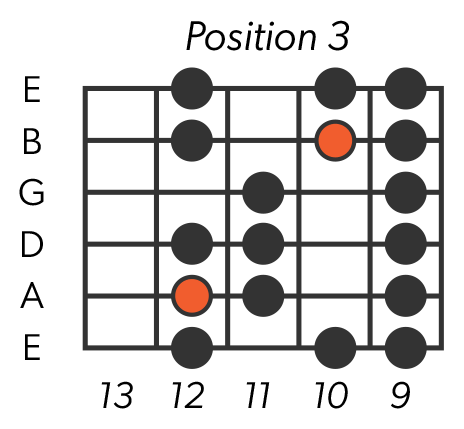
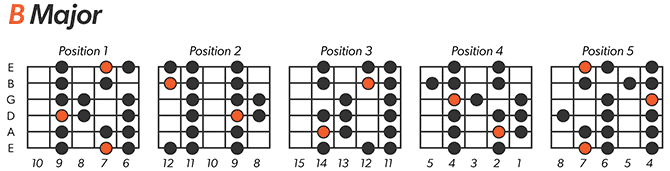
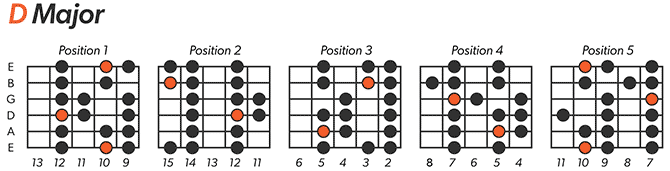
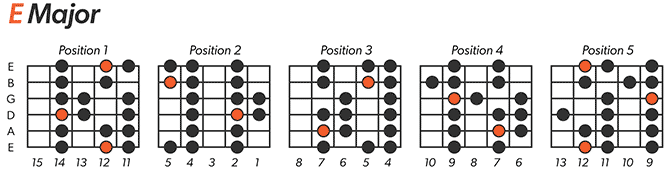
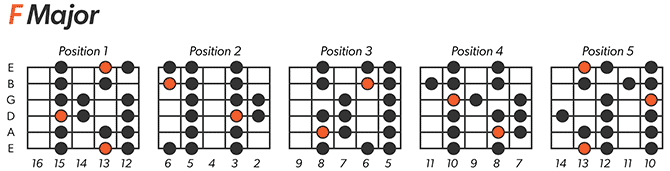
Below, you’ll find the five major scale positions shown in a left-handed format. Take note of the orange circles in each diagram. These mark the root notes and tell you which key the scale is in.
The fret numbers are shown beneath each diagram. The string names are listed along the left side to help you stay oriented on the neck.
For the example diagrams in this lesson, we’ll be using the A major scale. The notes in A major are: A, B, C?, D, E, F?, and G?.
Position 1
Position 1 of the major scale is a logical starting point because it lays out the scale in a clear, easy-to-follow pattern. The root notes are easy to spot, and the shape sits comfortably under the fingers. This makes it a solid reference point as you begin learning the scale.
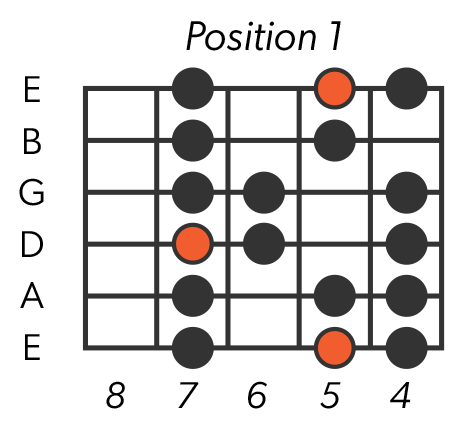
This position is often used for melodic lead lines and simple solos. Experiment by playing freely within the shape, then resolve to a root note to hear the bright, stable sound of the major key.
Once this position feels natural, the other major scale shapes will be much easier to connect and understand.
Position 2
The 2nd position of the major scale is still very manageable for beginners, though it introduces a slightly wider finger spread. The root notes appear on the 4th string at the 7th fret and the 2nd string at the 10th fret. This gives you clear reference points as you move away from Position 1.

Position 3
Position 3 sits comfortably under the fingers and centers around the root notes on the 5th string at the 12th fret and the 2nd string at the 10th fret. These root locations make it easier to visualize how this shape connects to the surrounding positions.
Position 4
The 4th position of the left-handed Major scale moves higher up on the neck and contains root notes on the 5th string and the 3rd string.

Position 5
The 5th position is the final shape in the five-position major scale system. The root notes in this position are located on the 6th string at the 5th fret, the 3rd string at the 2nd fret, and the 1st string at the 5th fret.
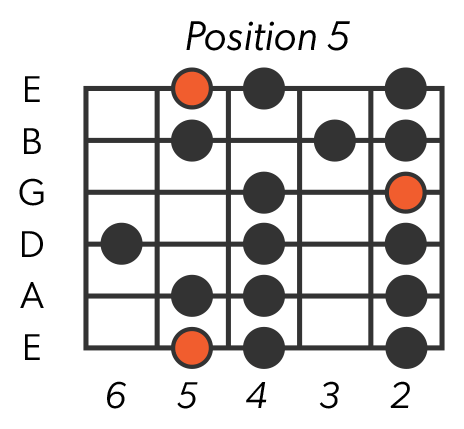
Here, I’ve noted the shape back down at the second fret so you can more easily see how it connects back up with position 1. However, you can also play it from the 14th fret if you’d prefer to continue moving up the neck.
How to Connect All 5 Major Scale Boxes
All five major scale patterns are connected across the fretboard, and several notes are shared between neighboring positions. In many cases, two adjacent shapes will contain multiple notes in the same fret locations. This is what allows the scale to flow smoothly up and down the neck.
The diagram below shows how each position of the A major scale links together to form one continuous pattern across the guitar.
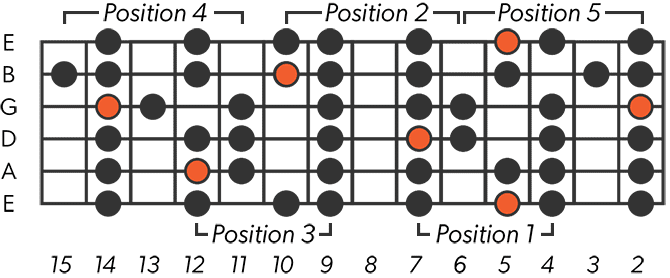
It might help to think of each shape as a separate room on the fretboard, with the overlapping notes acting as doors between them.
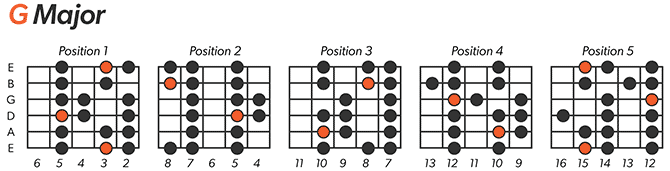
Begin by getting comfortable with Position 1 in A major, then slowly add the surrounding patterns one at a time. Once you can move freely between all five positions, try shifting the entire system to other keys such as G major or C major (see the diagrams below for help).
Practice along with backing tracks, and you’ll start to hear how the major scale opens up melodic soloing all over the neck.
All Left-Handed Major Scale Charts
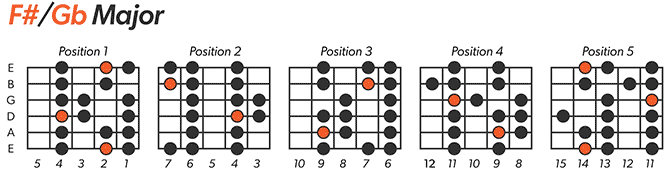
Check out all the lefty Major Scales below. Or, hit the button to download all of the charts as a handy PDF that you can print out and keep.
Download and Print the Scales





Practice With Jam Tracks
To practice these scales, why not head over to my list of guitar Jam Tracks? Here, you will find thousands of free backing tracks.
More Left-Handed Lessons
You’ll find plenty more guides in the left-handed guitar lessons area of the site!

