
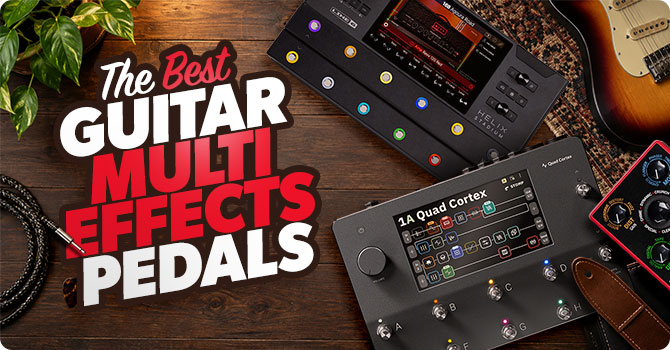
If you are looking for the best guitar multi-effects pedals, modern units make it easier than ever to access dozens of tones without building a huge pedalboard. They can combine amp modeling, distortion, modulation, delay, reverb, looping, recording features, and much more in a single box.
For this guide, I have focused on the best guitar multi-effects pedals currently available for a wide range of players and budgets. That includes simple options for beginners, compact units for existing pedalboards, full-size floorboards for gigging, and premium processors for players who want advanced routing, amp captures, and studio-quality sounds.
My top overall pick is the Boss GX-1 because it offers an excellent mix of price, features, portability, and ease of use. However, there are several strong alternatives depending on how you plan to use your setup.
Disclosure: If you decide to purchase a guitar using the links in this article I will earn a small commission at no additional cost to you. Thank you!
Best Guitar Multi-Effects Pedals at a Glance
If you are short on time, the table below gives you a quick overview of my top multi-effects pedal picks and where each one fits best.
| Product | Best For | Format | Price |
|---|---|---|---|
| Boss GX-1 | Best overall | Compact + expression | $ |
| Line 6 POD Express | Beginners | Compact | $ |
| Blackstar ID:X Floor Three | Affordable floorboard | Full-size + expression | $$ |
| Boss ME-90 | Ease of use | Full-size + expression | $$ |
| Boss GX-10 | Mid-range | Compact + expression | $$ |
| HeadRush Flex Prime | Touchscreen value | Compact | $$ |
| Line 6 HX Stomp | Pedalboards | Compact | $$$ |
| Kemper Profiler Player | Compact pro rig | Compact | $$$ |
| Line 6 Helix Stadium Floor | Premium | Full-size | $$$$ |
| Neural DSP Quad Cortex | Amp captures | Full-size | $$$$ |
The right choice will depend largely on how much control you need, whether you want something compact or floorboard-sized, and how much you want to spend. I have covered each model in more detail below.
Boss GX-1: Best Overall Guitar Multi-Effects Pedal
Get The Best Price
Shop at Sweetwater (USA)
Shop at Guitar Center (USA)
Shop at Thomann (Europe)
Shop at Amazon (Worldwide)
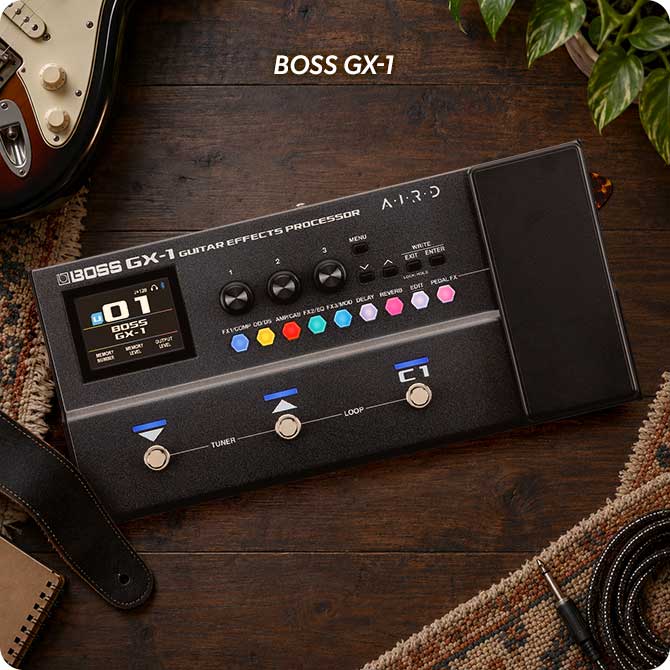
The Boss GX-1 is my top overall pick because it offers an excellent balance of price, features, portability, and ease of use. Released in January 2026, it brings Boss’ newer GX platform into a much more affordable package and is powerful enough for beginners without feeling like something you will quickly outgrow.
Key Specs
- 23 amp models
- More than 140 effects
- Up to 8 simultaneous effect blocks
- 99 user presets
- Built-in expression pedal
- USB-C, Bluetooth, headphone output, and IR support
Why I Like It
The GX-1 packs a huge amount into a compact unit. You get a broad range of Boss effects, amp models, an expression pedal, a looper, Bluetooth for backing tracks, and USB connectivity for recording.
It is also easier to navigate than many multi-effects processors. Dedicated effect buttons let you jump straight to the section you want to edit, while Boss’ Gear Suite presets make it easier to find usable sounds without spending ages tweaking settings.
For home practice, recording, and general-purpose use, it covers almost everything most guitarists will need.
Any Drawbacks?
The main limitation is the three-foot switch layout, which can feel restrictive for more complicated live setups. Players who need more hands-on control may prefer the larger Boss GX-10.
Who Is It Best For?
I think the GX-1 is best suited to beginner and intermediate players who want a versatile, affordable multi-effects unit that is easy to use but still offers plenty of room to experiment and grow.
Line 6 POD Express: Best Multi-Effects Pedal for Beginners
Get The Best Price
Shop at Sweetwater (USA)
Shop at Guitar Center (USA)
Shop at Thomann (Europe)
Shop at Amazon (Worldwide)
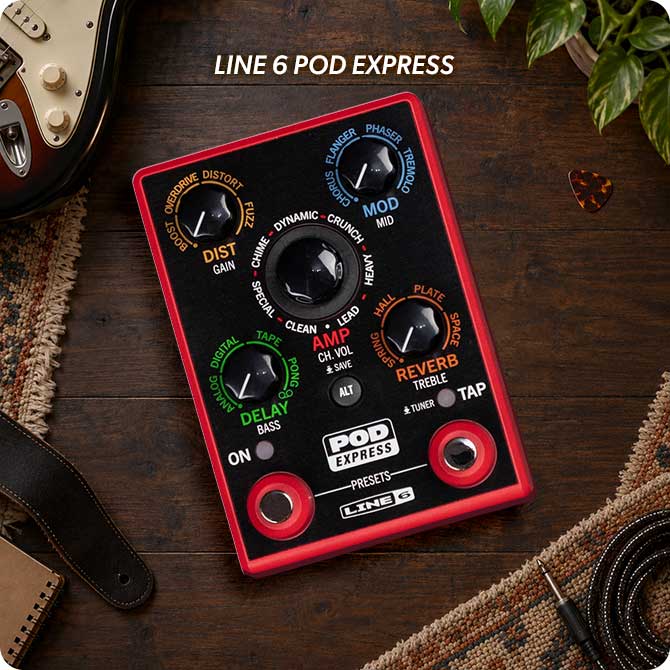
The Line 6 POD Express is my top pick for beginners because it keeps things simple without stripping away the features that make a multi-effects pedal useful. It is compact, affordable, easy to understand, and based on Line 6’s well-established HX modeling technology.
Key Specs
- 7 amp models
- 7 cab models
- 17 distortion, modulation, delay, and reverb effects
- Built-in looper
- USB audio interface
- Headphone output
- Battery or USB power
Why I Like It
The biggest advantage of the POD Express is its simplicity. Instead of navigating deep menus, most of the controls are right in front of you, so you can quickly adjust your amp sound, add effects, and start playing.
That makes it a great first multi-effects pedal for someone who is still learning what different effects actually do.
Despite the simple layout, it is not just a basic practice tool. You can connect headphones for silent practice, record directly to a computer over USB, and use the built-in looper to work on timing, riffs, and improvisation.
Any Drawbacks?
The trade-off for the simple design is that it offers fewer amps, effects, and routing options than more advanced processors. There is also no built-in expression pedal or screen.
Who Is It Best For?
I think the POD Express is ideal for beginners, bedroom players, and anyone who wants a straightforward multi-effects pedal without a steep learning curve.
Blackstar ID:X Floor Three: Best Affordable Floorboard
Get The Best Price
Shop at Sweetwater (USA)
Shop at Guitar Center (USA)
Shop at Thomann (Europe)
Shop at Amazon (Worldwide)
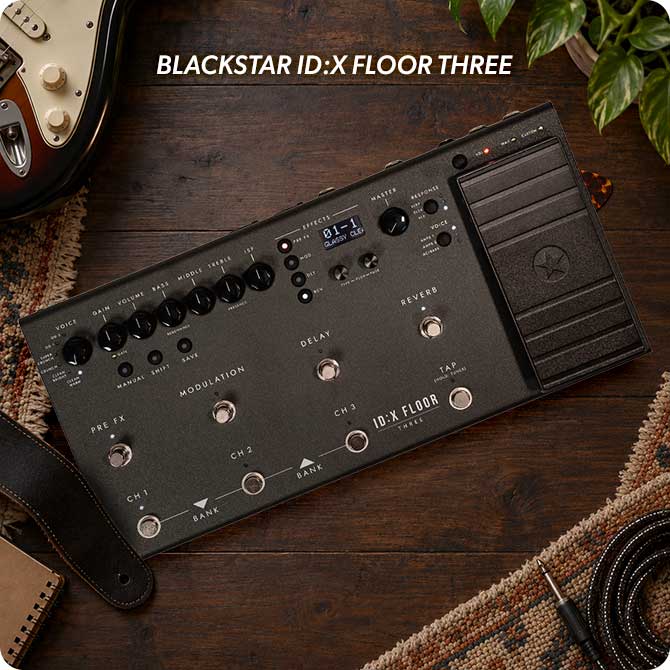
The Blackstar ID:X Floor Three is my pick for players who want a full-size multi-effects floorboard without spending flagship money. Released in 2026, it offers a surprisingly deep set of amp models, effects, and live-friendly controls for its price.
Key Specs
- 12 electric guitar amp models
- 3 bass amp models and 2 acoustic voices
- 35 effects
- 99 patches
- 8 footswitches
- Built-in expression pedal
- CabRig speaker simulation
- MIDI, USB-C, XLR outputs, and effects loop
Why I Like It
The biggest attraction here is how much physical control you get for the money. Eight footswitches and a built-in expression pedal make the Floor Three much easier to use on stage than many compact processors in this price range.
Blackstar has also kept the interface refreshingly hands-on. Dedicated gain, EQ, volume, and ISF controls make it feel more like adjusting an amp than programming a computer. The 35 effects cover drive, modulation, delay, and reverb, while CabRig provides detailed speaker simulation for direct recording or running straight into a PA.
Any Drawbacks?
It cannot match the routing flexibility or sheer number of models found in more expensive processors. At 6.17 lbs, it is also noticeably larger and heavier than compact alternatives.
Who Is It Best For?
I think the ID:X Floor Three is ideal for players who want an affordable, gig-ready floorboard with plenty of hands-on control and very little menu diving.
Boss ME-90: Best Multi-Effects Pedal for Ease of Use
Get The Best Price
Shop at Sweetwater (USA)
Shop at Guitar Center (USA)
Shop at Thomann (Europe)
Shop at Amazon (Worldwide)
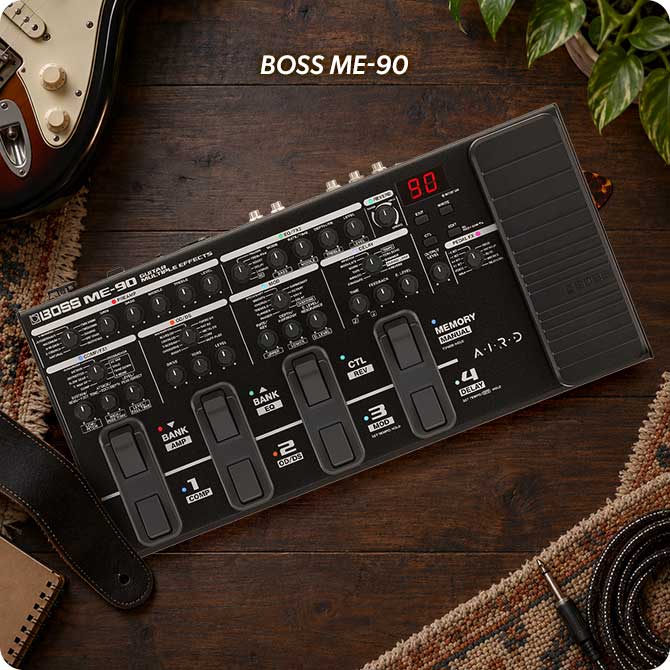
The Boss ME-90 is my top choice for players who want the flexibility of a multi-effects unit without relying on deep menus. Its knob-heavy layout feels much closer to using a traditional pedalboard, which makes it one of the easiest full-size processors to understand and adjust on the fly.
Key Specs
- 11 amp types
- More than 60 effects
- 36 preset and 36 user patches
- Built-in expression pedal
- USB-C audio connectivity
- Battery or AC power
Why I Like It
The biggest selling point is the hands-on control. Most important settings have their own knobs, so you can make quick changes without scrolling through layers of menus.
That makes the ME-90 especially appealing for players coming from individual stompboxes. You still get amp modeling, modulation, delay, reverb, drive effects, and an expression pedal, but the workflow remains familiar and straightforward.
It is also a practical option for rehearsals and gigs because the footswitch layout gives you more direct control than smaller units.
Any Drawbacks?
The interface is intentionally traditional, so players who prefer touchscreens, detailed visual editing, and more advanced routing may find it less sophisticated than newer processors.
Who Is It Best For?
I think the ME-90 is ideal for guitarists who want plenty of sounds and effects but would rather turn knobs and press switches than spend time navigating menus.
Boss GX-10: Best Mid-Range Multi-Effects Pedal
Get The Best Price
Shop at Sweetwater (USA)
Shop at Guitar Center (USA)
Shop at Thomann (Europe)
Shop at Amazon (Worldwide)
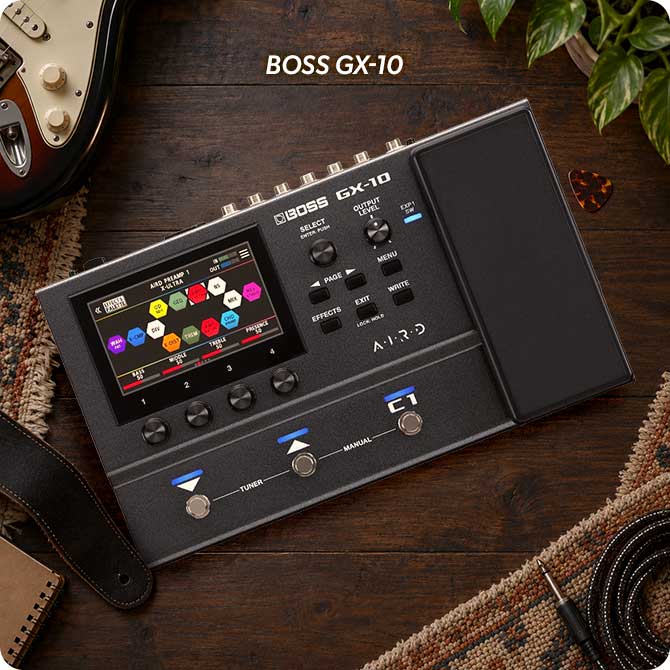
The Boss GX-10 is my mid-range pick for players who want a noticeable step up in flexibility without moving into flagship pricing. It uses the same core sound engine and touchscreen interface as the larger GX-100, but packs everything into a much more compact format.
Key Specs
- 23 guitar amp models and 9 bass amp models
- 170 effects
- Up to 15 assignable effect blocks
- 198 user memories and 99 presets
- Color touchscreen
- Built-in expression pedal
- Send/return loop and USB-C audio
Why I Like It
The GX-10 strikes a very good balance between depth and usability. You can build fairly complex signal chains, run up to two amps in a single patch, and rearrange effects directly on the touchscreen.
I also like that it gives you much of the GX-100 experience in a smaller unit. The expression pedal, effects loop, IR support, and flexible routing make it suitable for home recording, rehearsals, and live use without taking up a huge amount of floor space.
Any Drawbacks?
The three main footswitches can feel restrictive if you want lots of direct control during a gig. Bluetooth is also not built in and requires Boss’ optional adapter.
Who Is It Best For?
I think the GX-10 is best for intermediate and experienced players who want powerful routing, strong Boss effects, and a modern touchscreen interface in a relatively compact package.
HeadRush Flex Prime: Best Touchscreen Value
Get The Best Price
Shop at Sweetwater (USA)
Shop at Guitar Center (USA)
Shop at Thomann (Europe)
Shop at Amazon (Worldwide)
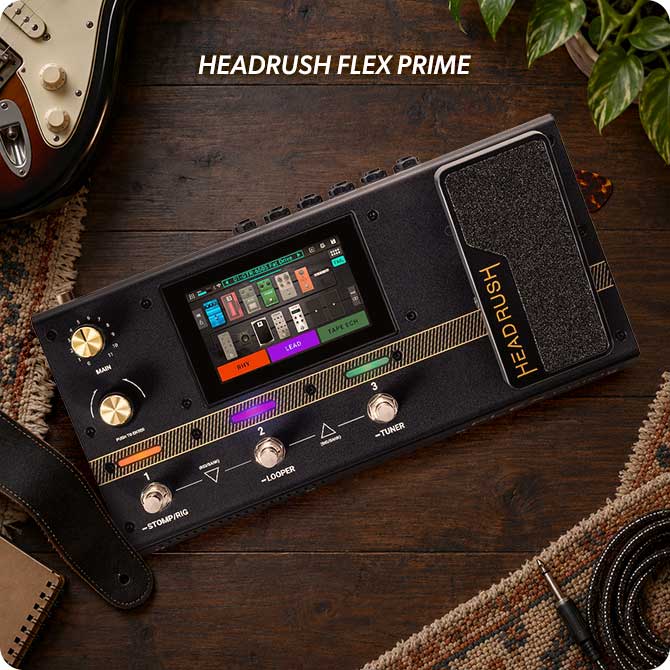
The HeadRush Flex Prime is my pick for players who want a modern touchscreen workflow without paying flagship prices. It combines amp modeling, effects, cloning technology, and flexible routing in a compact floor unit that is particularly well suited to live use and home recording.
Key Specs
- 50+ amp models
- 400+ effects
- 14 simultaneous processing blocks
- 7-inch touchscreen
- Built-in looper
- ReValver amp cloning
- USB audio interface
- MIDI, effects loop, and stereo outputs
Why I Like It
The touchscreen is the main attraction. Building and editing signal chains feels much more intuitive than navigating through small displays and nested menus, which makes the Flex Prime easy to adjust quickly.
It also offers a lot of flexibility for the price. You can create fairly complex rigs, clone amps and pedals withthe brand’s ReValver technology, record over USB, and use the built-in looper for practice or performance.
Any Drawbacks?
The Flex Prime is more compact than some full-size floorboards, so players who want lots of dedicated footswitches may find the physical controls a little limited. The touchscreen-focused workflow may also be less appealing if you prefer traditional knobs and switches.
Who Is It Best For?
I think the Flex Prime is best for players who want a modern, touchscreen-driven multi-effects unit with plenty of power for both stage and studio use.
Line 6 HX Stomp: Best Compact Multi-Effects Pedal
Get The Best Price
Shop at Sweetwater (USA)
Shop at Guitar Center (USA)
Shop at Thomann (Europe)
Shop at Amazon (Worldwide)
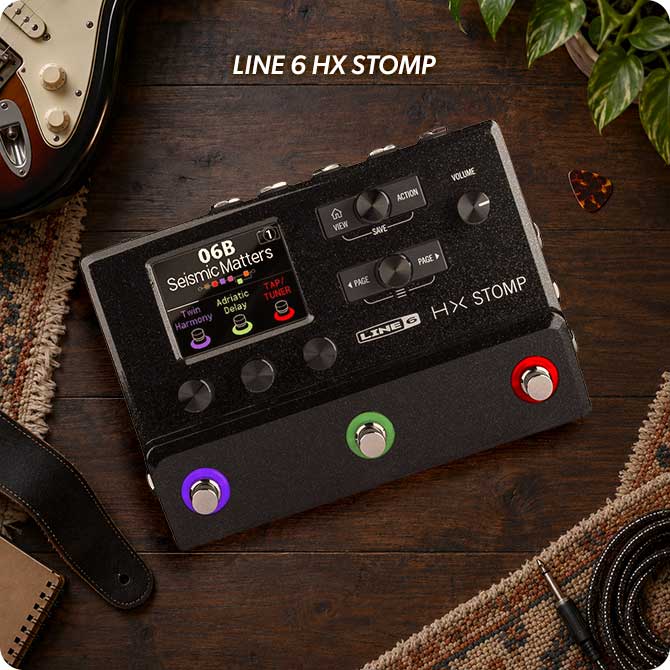
The Line 6 HX Stomp is my top compact pick for players who want serious amp modeling and effects without giving up half their pedalboard. It packs much of the power of the Helix ecosystem into a small format that works equally well as a complete rig or as part of an existing pedalboard.
Key Specs
- More than 300 amps, cabs, and effects
- Up to 8 processing blocks
- 126 user presets
- 3 capacitive-touch footswitches
- Dual effects loops
- MIDI in and out
- 24-bit/96kHz USB audio interface
- Third-party impulse response support
Why I Like It
The HX Stomp gives you the same HX modeling technology used throughout the Helix family in a unit that can slot neatly onto an existing pedalboard. You can use it as a complete rig, an amp modeler, a multi-effects processor, or simply as a way to add extra sounds to a traditional setup.
Its connectivity is another big advantage. Stereo outputs, MIDI, dual effects loops, USB recording, and support for external footswitches or expression pedals make it far more flexible than its size suggests.
Any Drawbacks?
Three footswitches may not be enough for everyone, especially if you plan to use the HX Stomp as your entire live rig. The interface also takes some time to learn.
If you want more direct foot control, the HX Stomp XL offers eight footswitches while keeping the same core HX platform.
Who Is It Best For?
I think the HX Stomp is best for experienced players who want a compact multi-effects pedal that can integrate neatly into an existing pedalboard without taking up much space.
Kemper Profiler Player: Best Compact Amp Profiler
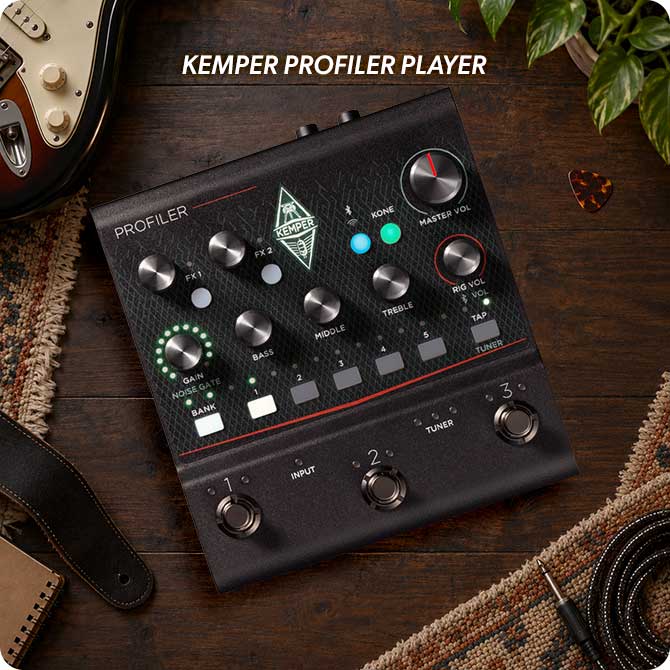
The Kemper Profiler Player is my pick for guitarists who want access to Kemper’s huge library of amp profiles in a compact pedalboard-friendly format. It delivers the same core Kemper amp tones as the larger Profiler units, but in a much smaller package that is easy to integrate into an existing rig.
Key Specs
- 50 onboard rigs
- 4 effect slots
- 136 effect settings
- Liquid Profile support
- IR loading
- Bluetooth and Wi-Fi
- USB audio interface
- USB MIDI and expression pedal support
Why I Like It
The main appeal is access to Kemper’s profiling ecosystem. Instead of relying only on traditional amp models, you can load Profiles designed to recreate specific amplifier and cabinet setups, with thousands available through the wider Kemper community.
It is also impressively compact at just 5.71 inches wide and 2.45 lbs, which makes it easy to fit onto an existing pedalboard. USB audio, Bluetooth playback, Wi-Fi, and Rig Manager support also make it useful for practice and recording as well as live use.
Any Drawbacks?
The Player has a much more minimal physical interface than larger Kemper units, so deeper editing is easier through Kemper’s Rig Manager app. It also has fewer onboard effect slots than some similarly priced guitar effects processors.
Who Is It Best For?
I think the Profiler Player is best for guitarists who care primarily about realistic amp tones and want access to the Kemper ecosystem without carrying a full-size Profiler.
Line 6 Helix Stadium Floor: Best Premium Multi-Effects Processor
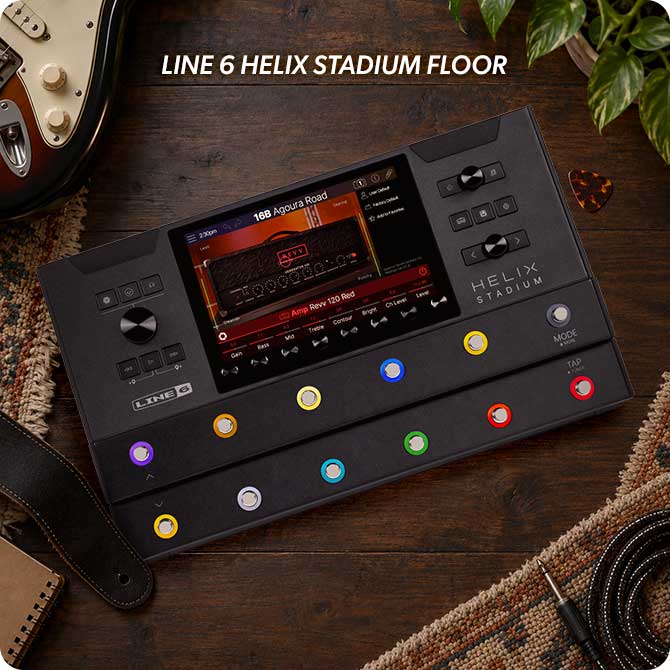
The Line 6 Helix Stadium Floor is my premium pick for players who want a powerful all-in-one processor with a modern interface and huge room for expansion. It combines Line 6’s latest Agoura amp modeling with a large touchscreen, advanced routing, and a deep effects library.
Key Specs
- 132 amp models with 152 amp channels
- 260+ effects
- 60+ speaker cabinet models
- 8-inch high-resolution touchscreen
- Proxy amp, cab, and effect cloning
- Two effects loops
- USB-C, USB-A, Wi-Fi, and Bluetooth
- 32GB removable microSD storage
Why I Like It
The biggest attraction is how complete the Stadium platform feels. The 8-inch touchscreen makes editing much faster than traditional menu-heavy processors, while the latest Agoura modeling platform is designed to provide more realistic amp response and feel.
It is also extremely flexible. You can build complex rigs, load cabinet IRs and Proxy clones, integrate external pedals through the effects loops, and use it as the centerpiece of a live or studio setup.
Any Drawbacks?
Price is the obvious one, as this is aimed at serious players rather than casual users. The regular Stadium Floor also does not include a built-in expression pedal, unlike the larger Stadium XL Floor.
Who Is It Best For?
I think the Helix Stadium Floor is best for experienced players who want a flagship-level processor with deep routing, extensive effects, and a modern touchscreen workflow.
Neural DSP Quad Cortex: Best for Amp Captures
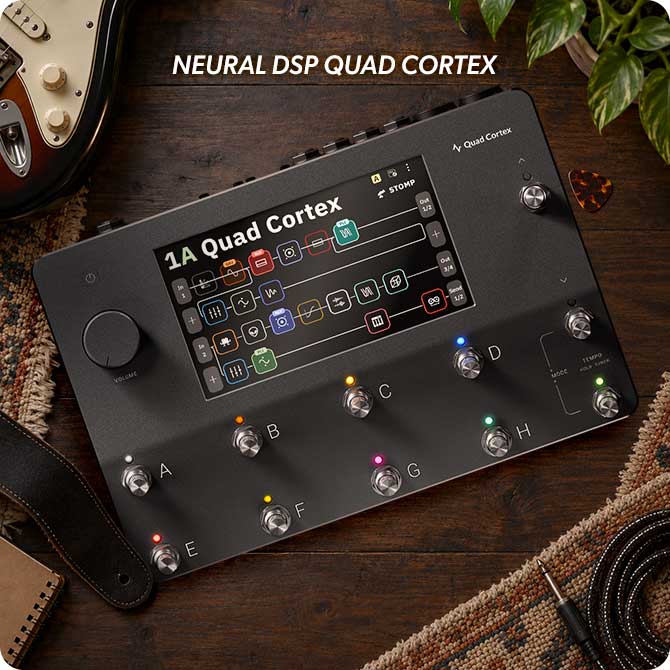
The Neural DSP Quad Cortex is my top pick for players who want to capture real amps, pedals, and cabinets while still having access to a powerful all-in-one multi-effects platform. Its combination of Neural Capture technology, flexible routing, and a large touchscreen makes it one of the most capable processors in this guide.
Key Specs
- 90+ amp models
- 100+ effects
- 1,000+ impulse responses
- 7-inch touchscreen
- 11 rotary footswitches
- Dual effects loops
- 16-channel USB audio interface
- Neural Capture V1 and V2 support
Why I Like It
The biggest selling point is Neural Capture. You can capture the character of compatible amplifiers, cabinets, and drive pedals, then use those sounds inside your own presets. Neural DSP also provides access to a large library of community and factory captures, giving you far more tonal options than the onboard models alone.
The hardware is equally impressive. The large touchscreen makes complex signal chains much easier to build, while the 11 footswitches provide plenty of control for live use.
Any Drawbacks?
Price is the main drawback. This is a serious investment, and many players simply will not need this level of processing power or routing flexibility.
Who Is It Best For?
I think the Quad Cortex is best for experienced players who want premium amp modeling, extensive routing, and the ability to capture and recreate their own favorite amps and pedals.
How to Choose the Best Guitar Multi-Effects Pedal
Choosing the right multi-effects pedal mostly comes down to how you plan to use it. A beginner practicing at home will have very different needs from someone building a professional live rig.
Amp Modeling
Many modern multi-effects pedals include amp and cabinet modeling, allowing you to plug directly into headphones, an audio interface, powered speakers, or a PA system without using a traditional guitar amp.
If you want an all-in-one rig, amp modeling should be high on your priority list. If you already love your existing amp and mainly want effects, it may be less important.
Number of Footswitches
More footswitches generally mean easier control during live performances. Compact units save pedalboard space, but you may need to switch between different modes to access all of your presets and effects.
For gigging, I prefer units with plenty of dedicated switches. For home use or an existing pedalboard, a smaller processor can make more sense.
Expression Pedal
A built-in expression pedal is useful for volume, wah, pitch effects, and controlling other parameters in real time.
It is not essential, but it can save you from having to buy and connect a separate expression pedal later.
Ease of Use
Some processors rely heavily on touchscreens and menus, while others use traditional knobs and switches.
If you enjoy tweaking detailed signal chains, a touchscreen interface can be very useful. If you prefer the feel of individual pedals, something like the Boss ME-90 may feel much more natural.
Connectivity
Think about what you want to connect before buying. Useful features can include USB audio, MIDI, effects loops, headphone outputs, stereo outputs, Bluetooth, and external footswitch connections.
USB audio is especially handy if you want to record guitar directly into your computer.
Size and Portability
Full-size floorboards generally offer more switches and easier live control, but they also take up more space.
Compact units such as the HX Stomp or Kemper Profiler Player are easier to fit onto an existing pedalboard and are much more convenient to travel with.
Budget
You do not need to spend flagship money to get a good multi-effects pedal. Entry-level models now offer impressive amp sounds and effects, while spending more generally gets you better routing, more processing power, improved connectivity, and more sophisticated control options.
For most players, I think the sweet spot is finding the simplest unit that comfortably covers everything you actually need.
Guitar Multi-Effects Pedal FAQs
Are multi-effects pedals worth it?
Yes, especially if you want access to lots of sounds without buying a large collection of individual pedals. A good multi-effects unit can combine amp modeling, drive, modulation, delay, reverb, looping, recording tools, and more in one device.
Can a multi-effects pedal replace individual pedals?
For many players, yes. Modern processors can cover most common effects very well, although some guitarists still prefer individual pedals for specific sounds or for a more hands-on setup.
Do I need an amp with a multi-effects pedal?
Not necessarily. Many multi-effects pedals include amp and cabinet modeling, so you can run them directly into headphones, powered speakers, an audio interface, or a PA system. You can also use them with a traditional guitar amp if you prefer.
What is the best multi-effects pedal for beginners?
I recommend the Line 6 POD Express for beginners because it is simple to use, compact, and affordable. If you want something with more room to grow, the Boss GX-1 is also an excellent choice.
Can I use a multi-effects pedal for recording?
Yes. Many modern units include USB audio, which allows you to record directly into a computer without needing a separate audio interface. Some models also let you record both processed and dry guitar signals.
What is the difference between amp modeling and amp profiling or capturing?
Amp modeling recreates the behavior of amplifiers using digital models designed by the manufacturer. Profiling and capturing analyze the sound of a real amp, cabinet, or pedal and create a digital recreation of that specific setup.
Both approaches can sound excellent, but profiling and capturing are particularly useful if you want to recreate a specific piece of gear you already own or access captures created by other players.
Final Thoughts
There has never been a better time to buy a guitar multi-effects pedal. Even relatively affordable units now offer impressive amp modeling, deep effects libraries, recording features, and enough flexibility to cover everything from bedroom practice to live performance.
For most players, I think the Boss GX-1 offers the best overall balance of price, features, and ease of use. Beginners should also take a close look at the Line 6 POD Express Guitar, while players building a more advanced rig may prefer something like the HX Stomp, Helix Stadium Floor, or Quad Cortex.
The best choice ultimately depends on how much control you need, how portable you want your setup to be, and whether you plan to use the unit mainly for practice, recording, live performance, or all three.

