
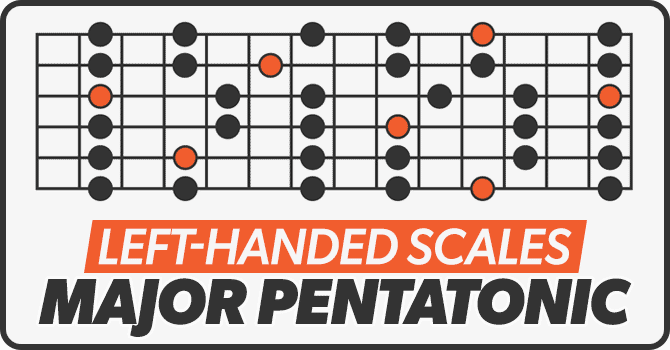
The major pentatonic scale is one of the most useful and musical scales you can learn on guitar. It has a bright, open sound and is used constantly in rock, blues, country, pop, folk, worship music, and countless other styles.
Compared with the full major scale, the major pentatonic scale uses just five notes. This makes it easier to learn, easier to memorize, and very forgiving when you start using it for solos and melodies.
Unfortunately, many scale lessons are still designed with right-handed guitarists in mind. If you play left-handed, standard diagrams can be awkward to follow and may slow down your progress. In this lesson, you’ll learn the major pentatonic scale using clear left-handed guitar charts made specifically for southpaw players.
By the end of this guide, you’ll be able to play the scale across the neck, understand where the root notes are, and start connecting patterns into longer lead lines.
You may also want to check out my other left-handed scale lessons for the Minor Pentatonic, Major, Natural Minor, and Blues scales.
5 Major Pentatonic Scale Positions For Lefties
One of the best ways to learn the major pentatonic scale is to break the fretboard into five smaller shapes. Instead of trying to memorize every note across the entire neck at once, these box patterns give you manageable chunks to work with.
Each position connects to the next, allowing you to gradually build a complete picture of the scale across the fretboard.
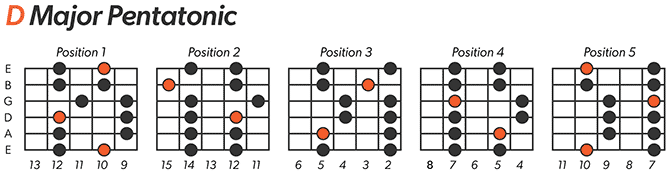
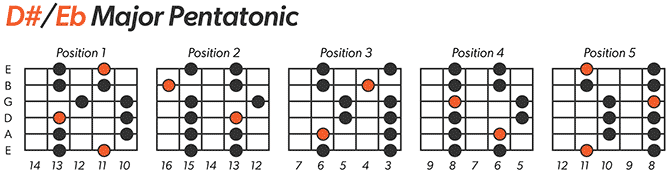
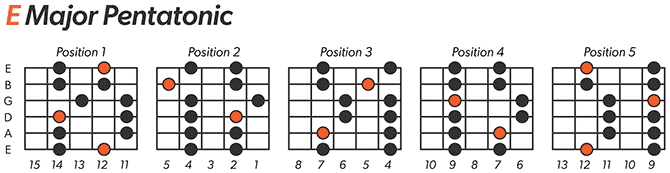
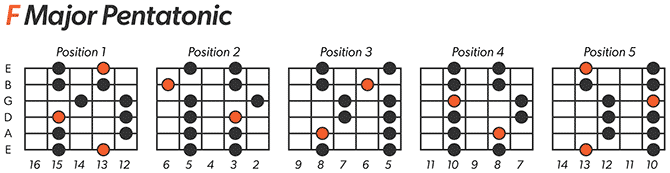
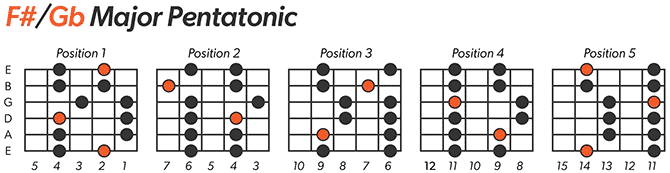
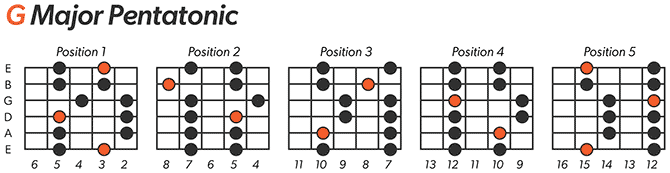
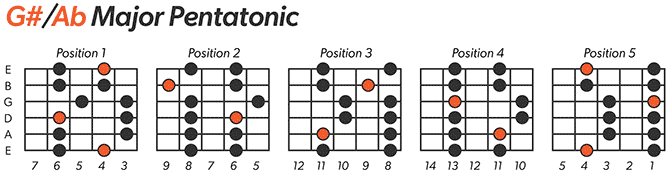
In the diagrams below, the orange circles show the root notes. These are the notes that give the scale its name and tell you which key you are playing in.
The fret numbers are shown beneath each chart, and the string names are listed along the left side to help you stay oriented.
For the example diagrams in this lesson, we’ll be using the A major pentatonic scale. The notes in A major pentatonic are:
A, B, C#, E, and F#
These notes come from the A major scale, but the 4th and 7th notes have been removed. This gives the major pentatonic scale its smooth, simple, and instantly musical sound.
Position 1
Position 1 is a great place to start because it gives you a clear and easy-to-use major pentatonic box shape. It sits comfortably under the fingers and gives you a strong foundation for playing melodies and simple solos.
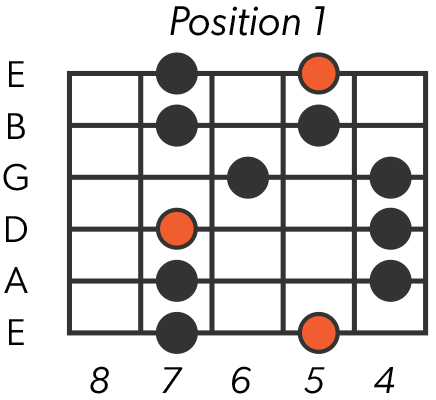
Pay close attention to the root notes (orange circles) in this position. Try starting and ending your phrases on these notes to hear the stable, resolved sound of the A major pentatonic scale.
Once this first position feels familiar, you can begin linking it with the next shape to move further across the fretboard.
Position 2
The 2nd position of the major pentatonic scale moves slightly higher up the neck and gives you a fresh area to explore. It still uses the same five notes, but the layout is different, which helps you create new phrases instead of getting stuck in one box.
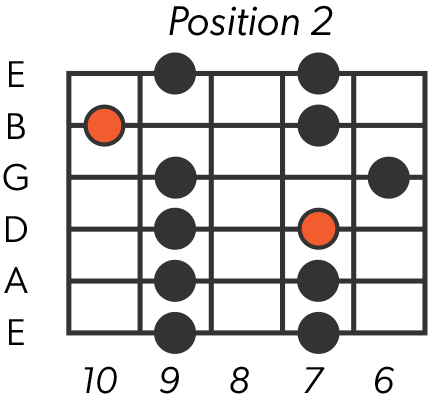
Practice moving between Position 1 and Position 2 slowly at first. Look for notes that sit close together between the two shapes, as these will help you slide or shift smoothly from one area of the neck to the next.
Position 3
Position 3 gives you another useful major pentatonic shape and helps expand your lead playing further up the fretboard.
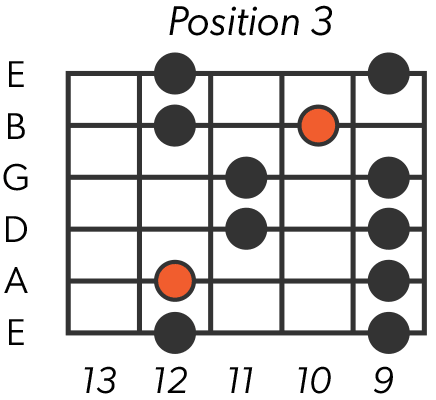
As with the previous shapes, focus on locating the root notes before trying to play quickly. Knowing where the roots are will make the scale feel much less like a random pattern and much more like a musical map.
Position 4
The 4th position of the left-handed major pentatonic scale continues the pattern higher up the neck. By this point, you should start to notice how the shapes overlap and share notes with the positions around them.
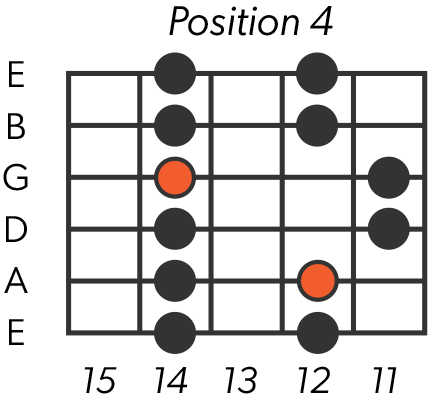
Take your time with this shape and compare it with Position 3 and Position 5. The more you notice the shared notes between patterns, the easier it becomes to connect everything together.
Position 5
Position 5 is the final shape in the five-position major pentatonic system. Once you learn this position, you’ll have covered the scale across the full fretboard.
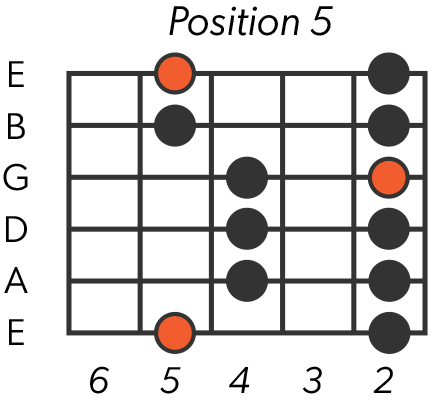
This shape also connects back around to Position 1. The five-position system repeats as you continue moving up the neck.
In the chart, the position is shown lower on the fretboard so that you can clearly see how it links back to the first shape. You can also play the same pattern higher up the neck if you want to continue the scale in the next octave.
Spend time moving between Position 5 and Position 1. This will help you understand the major pentatonic scale as one connected system instead of five separate boxes.
How to Connect All 5 Major Pentatonic Scale Boxes
All five major pentatonic positions are connected across the fretboard with each shape overlapping with the next.
This is what allows you to move smoothly from one area of the neck to another without losing your place.
The diagram below shows how all five positions of the A major pentatonic scale connect across the left-handed guitar fretboard.
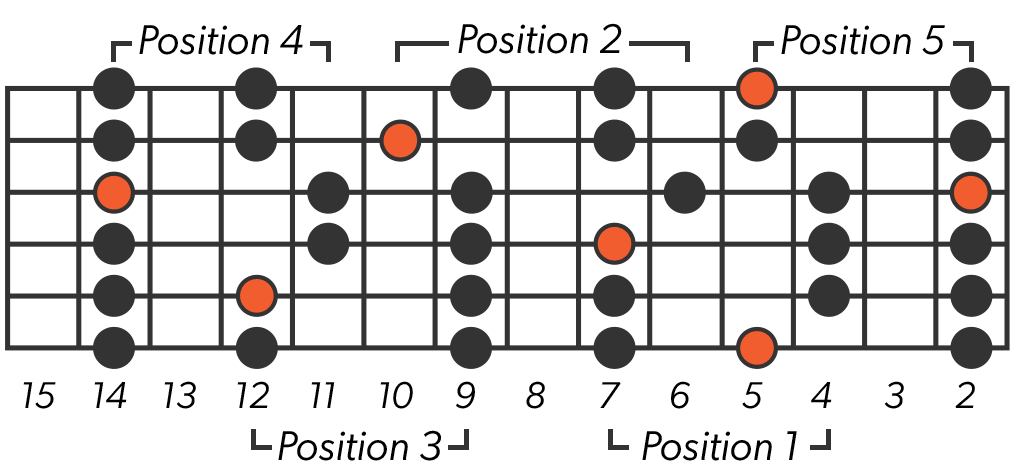
A helpful way to think about these patterns is to imagine each shape as a small room on the neck. The overlapping notes act like doors between those zones.
Do not worry about speed at first. Focus on clean notes, good timing, and knowing where your root notes are.
You can practice these shapes over backing tracks in major keys to make learning more fun.
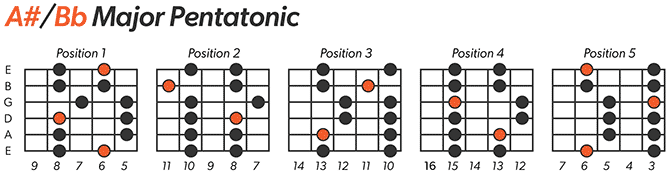
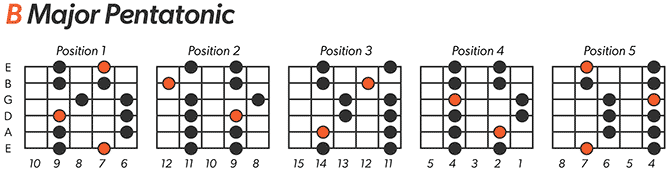
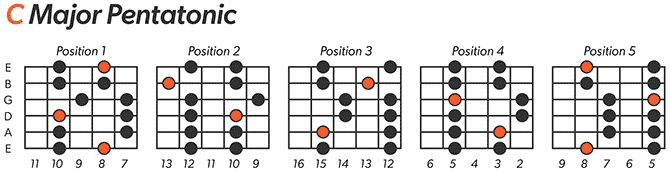
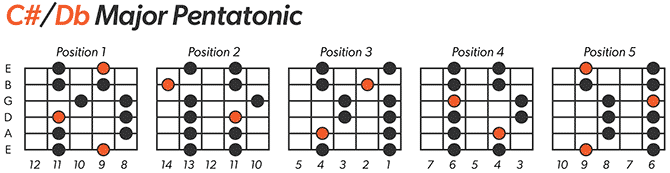
All Left-Handed Major Pentatonic Scale Charts
Check out all of the left-handed major pentatonic scale charts below. These diagrams show the scale in every key, making it easy to find the correct pattern for the song or backing track you are practicing with.
You can also download the complete set of charts as a free PDF. Print it out, keep it near your practice area, or save it to your phone or tablet for quick reference.
Download and Print the Scales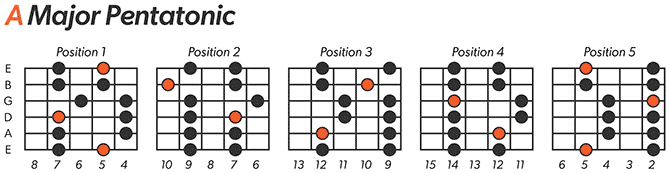
Major Pentatonic Scale vs Major Scale
The major pentatonic scale is closely related to the full major scale, but it uses fewer notes.
The A major scale contains seven notes:
A, B, C#, D, E, F#, G#
The A major pentatonic scale contains five notes:
A, B, C#, E, F#
The two missing notes are D and G#. These are the 4th and 7th notes of the major scale.
Removing these notes gives the major pentatonic scale a simpler, cleaner sound. It also means there are fewer notes that can create tension against the chords you are playing over.
This is one reason the major pentatonic scale is so popular with guitarists. It is easy to use, sounds good quickly, and works well for creating strong melodies.
If you already know your major scale positions, the major pentatonic scale will feel familiar. If you are newer to scales, the major pentatonic is a fantastic place to build confidence before moving on to the full major scale.
Practice With Jam Tracks
To put these scale shapes into action, head over to my list of guitar jam tracks. There, you’ll find thousands of free backing tracks that you can use to practice soloing, phrasing, and connecting the major pentatonic scale across the neck.
Start with an A major backing track if you are using the example diagrams from this lesson. Then try moving the same shapes into other keys.
More Left-Handed Lessons
You’ll find plenty more left-handed guitar lessons on the site, including scale guides, chord lessons, beginner tips, and practice resources designed specifically for left-handed players.

